Author: Maren Deepwell

  • My CEO’s report to ALT’s Members, August 2018

    My CEO’s report to ALT’s Members, August 2018

    This is a re-posted from the #altc blog

    Dear Members

    As I write this we have just one month to go before the largest event we organise each year, our Annual Conference. This year, as we celebrate 25 year of ALT, there is much to look forward to and this report covers some of the key developments across the Association.

    Your voice #altc #altc25

    First, I wanted to draw your attention to an ongoing project from ALT’s President, Prof Martin Weller, who has been blogging about the 25 Years of EdTech in this series of posts, counting down to 2018! Members have also started writing posts for publication on the #altc blog and we are inviting contributions tagged #altc #altc25 to add to this growing collection of voices and views from across our membership.

    Vote for your choice in the Learning Technologist of the Year Awards 2018

    As many of year will be aware, we have launched a new category of Award this year, celebrating outstanding achievements in research in Learning Technology. The judging panel, has reviewed, short-listed and interviewed this year’s entries and after careful deliberation the panel has selected the finalists. Now it’s up to you to vote for your choice for 2018 Community Choice Award. There can only be 1 winner, so you select your front runner from all individual, team and research project entries. Good luck, everyone!

    Vote https://altc.alt.ac.uk/2018/awardsvoting/

    Conference preparations

    With over 100 Members involved in the preparations for this year’s event, we look forward to welcoming as many of you as possible in Manchester and online. Alongside our Members who work hard to review papers, shape the social programme and chair sessions, we are particularly grateful for the support from our sponsors this year: Catalyst, VScene, Blackboard, MeeToo, RMResults and UNIwise.

    The Trustees of ALT have also made funds available to support 10 participants to come to the conference in memory of ALT’s former President, Doug Gowan, enabling those otherwise unable to attend to contribute and have a voice at the conference.

    With 140+ sessions, the programme this year includes research sessions, poster presentations, workshops and many short presentations.

    Register https://altc.alt.ac.uk/2018/registration/

    Changes to ALT’s Constitution

    At this year’s Annual General Meeting on 12 September Members will be voting on a resolution to adopt an updated version of ALT’s constitution. We will write to all Members to set out the proposed changes in more detail when the papers for the AGM are distributed, but the main changes to the constitution are to ensure ALT’s governance has more long term stability and is in line with best practice recommended by the Charity Commission. Thus the terms of service for the Vice-Chair, Chair and President of ALT, which currently are limited to 1 year and rotate annually, will be brought in line with the terms served by Trustees overall under the update constitution.

    Read more about ALT’s next Annual General Meeting.

    Staff team

    As our activities are growing and in particular the CMALT scheme is now being developed to offer new accreditation pathways to Associate and Senior CMALT, we also require more staffing resource and we have just welcomed Susan Greig as ALT’s new Operations Manager. Susan will support ALT’s operations including taking on the overall management of the CMALT scheme and related CPD activities, work with Special Interest Group and enhance communications.

    As senior staff Martin Hawksey and I continue to share our experiences of transitioning ALT’s operations to a fully distributed, virtual model of operations and we have now published 6 monthly blog posts and a podcast in this series on open leadership ‘Sharing our approach to leading a virtual team’.

    A note of thanks #CMALT

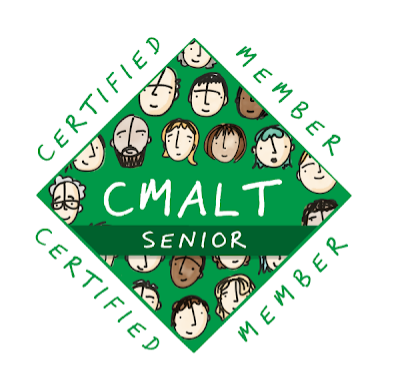
    I’d like to end my report with a note of thanks to all who have contributed to the CMALT consultations. As well as informing the development of the new Associate and Senior CMALT pathways, Certified Members led a ‘visual thinkery’ conversation with Bryan Mathers, resulting in these new visuals for the principles of ALT’s accreditation scheme. Thank you to everyone involved.

    session 2 – principles of CMALT

    We will be holding the first CMALT Ceremony as part of the AGM on 12th September to further enhance the recognition of the scheme. If you have been accredited or updated your portfolio in the past year, we look forward to congratulating you in Manchester.

  • Special podcast edition: Reflecting on the first six months leading a virtual team

    This is a joint post with Martin Hawksey (cross-posted here) about how we, as senior staff, lead our organisation to adopt virtual operations. You can read previous posts in this series here.

    We’re six months into our journey and in this special edition we look back at the highs and lows, share practical things we’ve learnt along the way and take our conversation from post to podcast to help us reflect and look ahead.

    Maren: when you suggested that we share our experiences openly I wasn’t really sure what to expect. After six months, I find it’s become a valuable part of my practice. It acts as a regular prompt to reflect not only on my own work, but the team and the organisation’s progress; it’s made us set aside time to have a regular dialogue about important, but not urgent things; and it’s helped me find a voice to share more openly in a way I hadn’t done before. Also, on a practical level, a written conversation helps alleviate my tendency to interrupt someone before they are finished. Looking back at our first post one of the key things I’ve learnt is that this process itself, as well as the output, is important. I’d encourage anyone to build sufficient rapport and trust to try out a similar approach to collaborating. That said, I’ve also found aspects of it challenging! For example, trying to strike the right balance between sharing and respecting the boundaries of what can’t be shared has been difficult at times. Or deciding what to focus on, what might be useful to others. It’s quite a big risk to take to share leading a transition whilst it’s happening and I’m grateful that both the Board and the team have been supportive from the beginning.

    Martin: The process of writing these posts has been very useful. The asynchronous nature of writing and opportunity to discuss our thoughts has created a space to reflect on where we are at and think about the future. Finding the right balance can be tricky. As part of ALT’s remit we are keen that as well as sharing the positive impact that technology has on learning and teaching that there is also an opportunity to share when things went wrong or didn’t work out. As you highlight as part of our transition it’s been important that we retain the trust and moral of the rest of the team. I should say that looking back over the last 6 months there have been no issues that haven’t been relatively easy to resolve. A challenge that came up in our February update was providing remote IT support. Overall we’ve had very few issues to deal with. Something at the back of my mind is our reliance on personal home broadband connections. Recently I changed by broadband provider. As I had overlapping contracts in terms of connectivity the change was seamless (the new WiFi router did however kill my home print server). Having checked the new providers broadband speed before signing up I was confident there wasn’t going to be any issues with speed. But what if there was an issue, or the connection can’t cope with the extra load from my daughter being at home during the school holidays? There is also the challenge of providing remote support when there is zero connectivity. We have some contingency plans in place for these situations but I think this is an area we can work more on over the next 6 months.

    Maren: You are right, in the first few months we thought a lot about infrastructure, because that was the most practical aspect of making this transition. On an ongoing basis, too, with staffing changes, moving house etc, the infrastructure is always a priority. I can now travel with our phone system in my pocket, and we can take our “office” with us when we run large events so that the whole team can be on site rather than someone having to cover the physical office space. It’s a powerful transformation. In our post about March we started discussing more about supporting staff, collaborating and also how this way of working influences our work as Learning Technologists. Here are three examples of how virtual working has changed my professional practice as a Learning Technologist: first, technology fails at team meetings. We’ve talked about our weekly team meetings a lot and how they form a cornerstone of us working together effectively as a team. We have had all kinds of technology fails, individually and as a team, over the past year and I think it feels very similar to getting things wrong in front of a room full of students or colleagues and the experience has made me have much greater empathy with someone nervous to try something new. Secondly, I have a much greater appetite for finding technological solutions to problems we identify. Bringing all of our operations into the virtual domain and working together with our Trustees, Members and colleagues in the same blended way has created a real sense of opportunity to improve what we do and that in itself has been really exciting (although maybe my enthusiasm for doing things better did not need additional motivation). Last, and this relates directly to my role as a Line Manager, I think the quality of communication is more important than anything else I do and that shapes all aspects of my practice. Regardless of whether it’s a chat message, video call, email, phone call or indeed meeting up face to face, I work hard to communicate equally well in every mode. As a virtual team we have to cope with difficult conversations, bad days and unexpected crisis online. Communication has always been really important to me and to how I succeed, but I am developing new skills and strategies through our virtual way of working. It feels like we are creating an effective blend of processes, technology & culture to build resilience for the highs and lows that we face and communication is at the heart of that. It may seem obvious, but our work over the past six months has really expanded my horizons on what that means in practice.

    Martin: Communication was something that came up in the May blog post. Whilst this was a busy time dealing with implementing GDPR we reflected on knowing how the team were coping and visibility when when working remotely. This month I attended Google Cloud Next ‘18, Google’s main conference for sharing what it’s doing in it’s cloud platforms including G Suite. G Suite is one of the core tools we use at ALT and has been invaluable in making it possible to work as a distributed team. Google use this event to launch new tools and enhancements to its products and from the sessions I attended improving communication was a strong theme, as one of the presenters put it “the ability to communicate effectively defines success”. In terms of what we discussed in May a new product that caught my eye was Hangouts Chat. This is a new version of Google’s chat tool similar to tools like Slack or Microsoft Teams. One of the features of Hangouts Chat is quick actions and reactions to messages. As part of this Google highlight emoji reactions “to build stronger, quicker and more expressive communications”:

    I’ve mixed emotions about emoji’s, particularly in a work context. I don’t mind using some emoticons like 🙂 in messages but as I don’t like the emoji palette Google uses I’ve turned off the feature that automatically turning text emoticons to emojis (e.g. 🙂 -> ). Also given my own feelings about the Google emojis at times I feel reluctant to impose these on others, using as an emoticon I feel there is a degree of subtlety. Emoji’s or ?

    Maren: I should probably start by saying that I don’t really use emoji much at all – neither at work nor in my personal communication. The person I text with most is my mother and she uses one emoji: little pink hearts at the end of a message. In her case that can mean anything from “thanks for taking me to the hospital today” to “sending you lots of love” to “take care and have a nice weekend”. I’m one of those people who mostly texts in full sentences with punctuation. That said, I have started using emoticons more in a work context since I started working as part of a distributed team. In chat, like Google chat such as we use for informal or immediate communications, I do find it useful to be able to convey my meaning in more than words. There are many instances when informal, but important conversations can be more nuanced – although that also depends on the person who i am chatting with and how well we know each other. Whilst in theory icon based communication should be more easily understood than words, I find that in practice most people I communicate with have very specific patterns in their use of icons and over time I learn what they mean. When I use tools like Slack for projects, I mainly use emoji such as to signal that I have seen a message, to show that I am participating or supporting something and for me that kind of interaction quickly becomes less meaningful. It’s like ‘likes’ or ‘hearts’ on social media. It’s useful, but limited. And I also dislike the Google chat and the iOS emoji palette even if they have become more diverse in recent years. Now, to answer your question: in a broader context, with a bigger user base and in contexts where being able to interact more, I’d probably say “Emoji? – ” – but in our immediate context of leading a distributed team, I think it’s .

    That wraps up our written conversation for this month, but we are also experimenting with the format by recording a special podcast this time, reflecting a bit more on the six months since we started this project and talking about what’s ahead and where we hope to be by the end of the first year.


    Missed a month? Here’re previous posts:

    • June – Virtual team, face to face team day: putting our blended approach to the test
    • May – Opportunity knocks: Using GDPR to strengthen virtual teams
    • April – 3 months in… hitting our first milestones as a virtual team
    • March – Developing collaboration as a virtual team
    • February – An open perspective on organisational transformation?
  • Crossing the Meridian: on stories and ideas

    Crossing the Meridian: on stories and ideas

    This week I had a really interesting conversation about how to communicate ideas and what role stories play in that. Shortly afterwards I crossed the Meridian Line in London and it made me think about all the different lines that connect our planet and us to each other. Networks, infrastructure, data… we often visualise the connections in a linear fashion. And most stories, too, follow that patterns, they have a beginning, middle and end, reaching from A to B… and back again.

    But as an Anthropologist I’ve come across many stories that follow a different pattern, stories that we tell, not necessarily write down, that are transmitted as part of our cultural heritage in the form of songs and tales, art or dance or in material culture.

    Over time, those stories can change, we may loose bits or make new additions. We may understand them differently as our context changes, we may not wish to remember them.  Some stories never die, whilst others are forgotten.

    But whatever shape or form or history stories may have, the act of the telling, is an important part of what we as human being do to make sense of the world. And our place in it. And our own stories. That is why I like to blog for example. It’s a strand of my story that I want to create and share, but also a tool for me to make sense of what I do and think about. It’s part of who I am and of my professional practice.

    So when I cross the Meridian I think about navigation and Patrick O’Brian and history. I think about measuring the globe and map making. I think about Victorian explorers and the nature of time. It’s the tapestry of my stories, the frame of reference I have built over the years and that helps me make sense of the world and my ideas about it. Yours will be different, everyone’s is. But if the story I tell is good, then it will communicate my ideas to you and enough of my perspective to enable us to establish some shared understanding.

    This week has been a good reminder that what I have to share, what I have to say, is already part of the stories in my head.

  • Virtual team, face to face team day: putting our blended approach to the test

    Virtual team, face to face team day: putting our blended approach to the test

    This is a joint post with Martin Hawksey (cross-posted here) continuing the story of how we, as senior staff, lead our organisation to adopt virtual operations. You can read previous posts here.

    June

    Last time we discussed how we used GDPR as an opportunity to strengthen how we work as a virtual team. Since then we had our first face to face team day, an important milestone in creating a blended approach to running a virtual organisation.

    Maren: The team day was followed the next day with the meeting of the Board of Trustees, in which for the first time all of our colleagues took part. I learnt a lot from both days: for example, I had to adjust my mindset from having a ‘team day out’ (which was previously the only time we would all travel somewhere together once a year to do some team building and have a meal together) to having a day working together. Whilst that may seem an obvious point to make, it’s an important distinction to communicate to everyone involved. The agenda we set out helped us prepare and be ready to focus on the task at hand. In order to make the most of team days we plan them in different locations. This time it included a site visit to the venue for our upcoming conference. Whilst combining activities like a site visit with a day working together face to face as a lot of advantages, having a changing location means that we need to sort out all the practicalities, like somewhere quiet to work or access to WiFi afresh each time. That’s a big change from having an office at which we convene and also means ensuring that we think about how to support the team as a group, taking into account individual needs. Some of the startup leaders I work with talk about how this degree of agility is difficult to make work in an equitable way and I found that the two days took more preparation than I had anticipated. As well as logistics, it is important that these days reflect our aims and values as an organisation. Inviting all staff to take part in the Board meeting is a good example of how we are trying to do this, but as well as time to work together, we also planned in time to eat and catch up informally and I felt those pockets of unstructured time were really important. This time, the Study, Museum of Manchester, became our work space for the day.

    Martin: The opportunity to work in new places is a nice feature of our approach, particularly when they are as nice as the Study. Thinking about the practicalities some thoughts that came to mind are with a team of 5, soon growing to 6, we are perhaps at the limits of places where it is easy to just turn up and get a seat. If I’ve got time before/after events or meetings in Edinburgh I’ll often go to the Dome on Potterrow, or when in Glasgow the Saltire Centre. These are great spaces but get very busy at times and you’d struggle to get more than 6 people around the same table. There however seems to be an explosion of affordable hot desking and meeting spaces, in particular, as part of start-up hubs. As a membership organisation there is also perhaps opportunities to combine visiting some of our Organisational Members and have some space for a team meeting. Combining the two could be interesting as it would let other members of the team see what we do. I suppose the danger of such an approach is the site visit becomes a distraction from getting team business done. Something else that came out of our meeting which I hadn’t really considered before is while I was happy and able to get up and leave for Manchester at 4:30am this might not be possible for everyone (plus getting home after 11:30pm because of delayed flights ain’t fun). Raises interesting questions about equitability.

    Maren: That’s true. As our team is distributed across the U.K. every location means longer travel times for someone. Achieving a balance between the flexibility of home working day to day and occasional travel whilst meeting our organisations’ needs can be a challenge. Organising the logistics is still a learning curve, but the other aspect I’d like to talk about is the actual work we did together. There were three parts to our day: first, the site visit which we all took part in and which helped us plan for the upcoming event. I think it was very useful to have everyone contribute ideas and ask questions on site and it saved us a lot of reporting back and another visit in the long run. Next, we spent some time together reviewing our project plan. We do review the plan regularly during our virtual team meetings, but it was insightful to do so in person as a team, seeing it projected on a big screen. For example, I noticed that we discussed more, asked more questions of each other. That continued when we spent time together working on different things after lunch. There was an opportunity for building rapport more informally that I hope will translate at least to some degree into our virtual collaboration. Two of our team had not met in person before, so that was an important function of the day, too.

    Martin: I agree that it felt like there was more collaboration and communication when we were working together in the same room. I think this underlines that it’s important to recognise there are differences between working as a distributed team rather than in a shared physical space. Until we all have a holodeck in our homes I don’t see this changing but it also is a reminder that we need to think about distributed teams differently and not just faithfully recreate the physical space online. This was captured a post by Noello Daley on ‘What Co-located Teams Can Learn From Remote Teams’. In particular, Noello highlighted “the importance of shifting not only process, but mindset”. Noello goes on to say that you should “shift from a local, spoken culture to a global, written culture”. I think ALT had a strong global written culture before become a distributed organisation so perhaps the difference is less apparent to me. The process and mindset is an interesting area. There is inevitably disruption in becoming a distributed team and in some ways you want to minimise this to allow people to adapt to a new working environment, the tension as a manager you don’t always want to continue old processes either because they are less efficient or don’t work in the new model. One of the challenges is something else Noello highlighted was in distributed teams there needs to be “empathy for each others’ needs”. This is something we have touched upon already. I feel part of the solution is also touched upon by Noello and mirrors our own blended approach: “plan to get together about four times per year. Use that time to re-establish team goals and culture”. Given the Manchester trip was an opportunity to share our individual perspectives of goals achieved to our Trustees and the process for identifying those goals was collaborative I think we should be having more staff days around Board meetings.

    Maren: I agree. Clearly our first attempt has highlighted how much potential these days have. But what about the day to day? Following on from the post by Noello you mention, I have been reflecting on how important it is to take some personal responsibility for what this recent article (found via @hopkinsdavid, thank you!) called ‘finding connection points’: the author suggests taking time to schedule regular lunches with co-workers, meet clients (Members, in our case) and getting involved in the community to ensure there is some face to face contact or at least time focused on building relationships. Some of this I would have previously thought about more in the context of CPD. As a small team we have long set up days to visit other organisations or Members to learn from and see how they do things, but in the context of operating as a virtual team, that’s taken on a different significance. Now it’s about making connecting with others an integral part of what we do as individuals, part of our professional practice. We can set an example and enable others, but to some extent it depends on how much an individual is willing to or interested in being part and contributing to that kind of working culture. Tech-focused solutions, like for example shared bookmarks, can help build a sense of shared space online. Yet it still depends on everyone contributing, everyone recognising the importance of working in a certain way and what benefits that has for us as a team and the organisation as a whole. In the last few hours of our team day we each prepared to talk to the Board about some key ways in which we have individually contributed to the success of the organisation in the past year and listening to that was probably the most powerful moment of the two days for me. We may not all be in the same place very often, but we are all part of the same vision and when we presented to each other I really felt that come across.

  • On a tangent to leading a virtual team… going on holiday

    On a tangent to leading a virtual team… going on holiday

    This blog is mostly about the work I do, and things I find interesting. But, as a Learning Technologist in a leadership role, I think a lot a lot about work/life balance even if I don’t share much about my life away from work on this platform. The current series of posts written jointly with Martin Hawksey in which we take an open approach to leading a virtual team has prompted me to reflect on how important it is to be aware of a how less formal, home-based work environment can affect one’s well being. As I have holidays coming up, I wanted to share my approach to taking a break. In an environment where many talk about their work ethic, on being indispensable or never having weekends or evenings off, it’s important to also talk about taking time away from work, taking a break.

    So, here is what works for me when I want to get away:

    Lists: a list of things to do before I go away, a list of things to handover/cover, a list of urgent things for when I get back, a list of long term things for when I get back, a list of things to check… ticking things off my lists and having somewhere to note all the things I won’t get done, is essential.

    Ruthless inbox clearing: delete, delegate, deal with… always nice to see how a firm deadline focuses the mind and suddenly everything that has been languishing in my inbox for a while is gone. I also make an effort to send much fewer messages in the week before I go away, to get fewer responses back.

    Make sure everything is covered: as a Line Manager and in a role where things have to be covered whilst I am away, I am fortunate to have colleagues who will deputise or cover for me. I put my arrangements in place well in advance and remind everyone that I’ll be away, to help them plan ahead, too. It’s a good opportunity for me to model what a handover looks like and how to plan ahead around urgent deadlines.

    Keep for everything that I’ve forgotten: I am a big fan of Google Keep and use it for managing my to do lists. In the first few days whilst I am on holiday I’ll remember lots of things that I have forgotten and so I make a special list to which I can add everything that comes to mind. If I write it down, I won’t worry about it and it’ll be waiting for me when I get back.

    Really actually go on holiday: if I intend to have proper time off, I don’t monitor email at all. I set my out of office and that is it.

    Interesting reading: one of my main priorities when I don’t have to work is to catch up on lots of reading. That may be work-related research at times, and having that to look forward to is a big motivation for me.

    I look forward to having a break from my usual routine, time to go for a run when I’m usually at my desk, time to spend with family and friends, time to stay up late… time enough to feel more curious, keen and inspired again when I head back to work.

  • Don’t think you are brilliant? Exploring the full colour spectrum of reflection.

    Don’t think you are brilliant? Exploring the full colour spectrum of reflection.

    Last year I wrote a post called Don’t think you are brilliant? Think again… and in it I shared my insights from being an assessor for CMALT, ALT’s peer-based accreditation scheme and how I observed that reflecting on practice can help you realise your own strengths and gain a sense of achievement.

    Since then, I have assessed a lot more portfolios and also explored those shared by other Certified Members (thanks for sharing!) and I have come across a few more thoughts on this, which I’d like to share with you now – mainly because I think most of us could do with a bit more confidence, recognition and a sense of a job well done before we hurry on to the next deadline or deliverable.

    It’s hard to feel that you are doing well when things are tough and often it takes a long time before you can look back and see how much progress you made at the time. When people in my network, mostly open practitioners, write brave posts sharing stories about their ups and downs I am always reminded that for everyone things can be difficult even if as an observer I can only see the what it looks like from the outside: I see the video, or hear the talk or read the paper, I pick up all the indicators of success, achievement, new thinking and so forth, but so often those only tell a small part of the story. But if you are chairing a meeting, on a stage or behind a lectern, people generally assume that you have it figured out. I salute those who let us peek behind the scenes, who share the more human side of their work. I hear people often advocate that we embrace sharing failures more, and I, too, support this notion strongly – but it is harder to do than it looks, I think. If failures are shared, it is mostly on the practical aspect of what we work on, on technology and tools, based on survey results or case studies. Very useful, but not personal like reflection can be.

    Some common factors in successful reflection:

    Making time: the most effective reflection is often born out of a habit to set aside time for it. Regularly. So that both good and bad weeks are considered, and over time a balanced perspective created. Some people write or have conversations, others think inside their own heads. Most come to record their ideas, thoughts or feelings in some ways. Some of the most insightful accounts I have read as an assessor demonstrate a clear sense of progression, i.e. someone having taking stock at different points in time and building a narrative around that.

    Sitting with it: reflection doesn’t always lead to expected or pleasant places. Sometimes a train of thought ends in an uncomfortable place. Or in a realisation that things aren’t going well. Failure looms large. One of the techniques I most admire is the ability to be present with that kind of realisation, to develop a more mature relationship to thinking about topics that are difficult to reflect on. It takes a lot of confidence to do that.

    Confidence in yourself: one of the ways in which reflection can go wrong is to rely only on external measures of success or failure. For example, you might reflect on a project as a failure if it didn’t meet its objectives fully even if you learnt a lot from it or it was a useful stepping stone to something new. Developing a sense of confidence and trusting one’s own judgement is a common component of effective reflection.

    So, make time to reflect and discover the brilliant or shiny part of your practice alongside all the grey bits, or the darker ones, too. Space to think comes in all colours.