Category: things I like

  • Lunch break ideas for hybrid workers

    At this time of year, it’s easy to focus on ever busy work schedules instead of activities that help with balance. Here in Cardiff the weather is dreary and grey, and not particularly inspiring even in the lightest hours of the day. Leaving my desk and screens in favour for a proper break feels much easier on sunny days.

    When I came across a book called Gone for Lunch: 52 Things to do in your lunch break (by Laura Archer), in the library recently it felt like a great opportunity to find some inspiration.

    Here’re my 10 favourite ideas for lunch break activities, inspired by the book but specifically adapted to the needs of hybrid workers. The ideas in the book are divided into for sections: activities you can do while sitting, being active, inside and outside.

    As most of us hybrid workers probably spend enough time sitting inside already, most of the activities on my list involve being active and/or outdoors, but there are two exceptions and I’ll start with those:

    1 Take a nap

    This is also in the book, and there are some useful tips here: aim to nap for between 10-30 minutes, don’t forget to set an alarm, and make sure you nap before 4pm and no later, to avoid disturbing your sleep in the night.

    One of the nicest upsides of working from home is that there usually are much better places to nap than in an office or on campus, and, in my case, the presence of willing pets who are just as keen to cuddle up for half an hour as I am.

    2 Meditate

    The book includes tips of trying desk yoga or to focus on ‘wish, pray, hope’ , so inspired by that, I am going to include meditation as a lunch break idea. There are plenty of apps out there like Calm or Insight Timer that offer free recordings, breathing exercises and timers to help engage in mindfulness and meditation.

    Personally, I find coming to a complete stop and resting in stillness for a few minutes is a powerful way to reset for the rest of the day, no matter how or where I do it.

    3 Green spaces

    I really like the idea of visiting green spaces. The book suggests that “spending as little as 40 seconds looking out over green space can boost concentration” and goes on to explore other benefits for our physical and mental wellbeing of spending time in nature.

    Depending on where you live and how much green space there is around you, looking at some maps of your local area will help you discover new green spaces close by, and help find new routes that you do not usually take.

    4 Local Café

    Adopted from the idea to visit local markets included in the book, you can visit (independent) local cafes which are close enough to where you live. Many of us find remote working from home can become quite lonely over time, and visiting local cafes or delis for an hour can help us reconnect with people and offer a change of environment.

    5 Listen to a podcast

    As a big podcast fan, I enjoyed reading the suggestions in the book for listening to podcasts during lunch breaks: start with short podcasts to find out what you like, look for podcast recommendations on blogs or sites you usually use, rather than charts within podcast apps to get more personal recommendations and make use of the broad range of subjects on offer to engage with different interests.

    One problem I encountered unwittingly with podcasts at lunchtime, is that I gravitated towards ones related to work. Listen to podcasts became more like professional development or catching up with things I hadn’t had time to read or listen to during work, which was productive, yes, but didn’t provide the break that I need at lunch to recharge. If you are looking to disconnect from work and really relax, choose a podcast with a relaxing topic unrelated to work.

    6 Take a photograph

    As an avid taker of photographs, the idea to take a “take a carefully considered photograph” really chimed with me. The idea is to really focus on the colour, form, shape and composition of the photograph, and to take time over it. Practical tips include turning on gridlines, focusing on a single subject, using reflection and so forth.

    This is an interesting activity as it’s completely flexible and can happen indoors and outdoors at any time. One I am going to try out for sure.

    7 Local Wildlife

    Another suggestion is to explore local wildlife, which could include taking part in activities like an online national butterfly count or bird watch, anywhere from gardening containers on a balcony, a nearby park or field.

    8 Play with a pet or care for a plant

    The most ‘local’ of animals for me are our dogs, and one of my favourite things to do during my lunch break is to play with the dogs in the garden. Hiding small treats for them to sniffle for or playing with their favourite toys and really focusing on them is a brilliant way to relax, and gives me a great sense of connection.

    Given that I am also devoted to my plants, another way to take a proper break from my screen is to care for my plants. Regular watering, dead heading flower pots… whatever it is on any given day really helps me to stay away from my screens for a while.

    9 Go for a wander

    This one probably doesn’t need much explanation, and can easily combine with several of the other activities… walk while listening to a podcast, walk a dog, wander in a green space, explore your local area and so forth.

    Or… for a complete change try a mindful walk. Really focus on the activity itself and avoid distracting yourself from what your senses tell you about your environment. Breathe easy and follow your feet.

    10 Visit a Cemetery

    My favourite moment reading the book was when I spotted “visit a cemetery” in the list of activities. Clearly, this is my favourite given that I spent years as an anthropology student in graveyards. For me, any opportunity to visit a cemetery is welcome.. so if you, too, like a bit of an explore through such spaces, then find your nearest one and enjoy your lunch break.

  • Personal reporting in Asana

    In my last post, I reflected on the benefits of a monthly newsletter as a tool for reflection and monitoring progress. For example, I shared how looking at my blog posts for the month gives me a chance to think about aspects of my work I have enjoyed and want to do more of, things I’d prefer to spend less time on, what I want to focus on in the coming month and what is going on the back burner or stopping all together.

    This kind of approach, focusing on what to stop/start or do more/less of is generally helpful, but I find it particularly effective when I review what I have been working on and can use specific examples. Now, in my CEO role, my team and I have started to use Asana last year to support collaboration and reporting across the organisation. I found it extremely useful from the start, but transferring all of my personal to do lists and productivity habits into a new platform has taken some time. As I became more confident in the platform, I found new ways to manage my workload and to review my own progress.

    One example of this, is that I have started to use Asana more for my weekly work planning, and I wanted to share some tips about how I do that:

    1. Reporting

    The reporting menu in Asana comes with a “My first dashboard” set up, and I have used this to set up a personal view of tasks by going into each one of the charts and adding a filter that selects only me as an assignee of the tasks being reported on. This way, I can see all of my tasks at a glance.

    It’s the first time in my career that I can analyse my workload at this level of detail, and it’s fascinating to compare my own sense of how things are going and what I am spending time on with what the dashboard view captures. It’s a useful exercise for me to consider what’s not being captured and why.

    Most of the time, I find leadership related activities are absent from the reporting. Although I have both shared and private plans that capture most of what I do “think about staffing problem” or “ruminate on difficult email response” type tasks are not always easy to quantify.

    2. Unscheduled tasks

    One of the key priorities for us as a team in order to make the most of Asana, is to ensure ALL tasks we add have a deadline and are assigned to someone. I get a lot of tasks assigned to me, and using the reporting feature helps me identify the proportion of tasks that are currently without a due date and thus falling off my radar. 

    I love the discipline and accountability a tool like Asana brings with it, particularly as it helps you capture what you are doing wrong (planning work without giving it a deadline or a lead) as well as what you are doing right. It’s fascinating for me to reflect on why this is happening in certain areas of the work we are doing, as it often points to a lack of communication or clarity elsewhere, which in turn helps me understand what I communicate effectively and what I need to do better to get across.

    3. My Tasks

    In Asana the Board view of My Tasks is starting to feel more helpful to me. I have set up a “To do this week” section, which I add tasks to at the start of my week. That helps me get a sense of whether my workload is reasonable or not. 

    I have also set up a CPD section for myself, in which I dump all CPD related stuff. I then have a recurring monthly task that reminds me to review this section. I intend to use this section as a short-cut to complete my CPD list during my next appraisal. 

    Here is a glimpse at my personal dashboard:  

    Screenshot of the dashboard showing graphs of completed and incomplete tasks in different ways.
  • Music therapy, hope and joy.

    Music therapy, hope and joy.

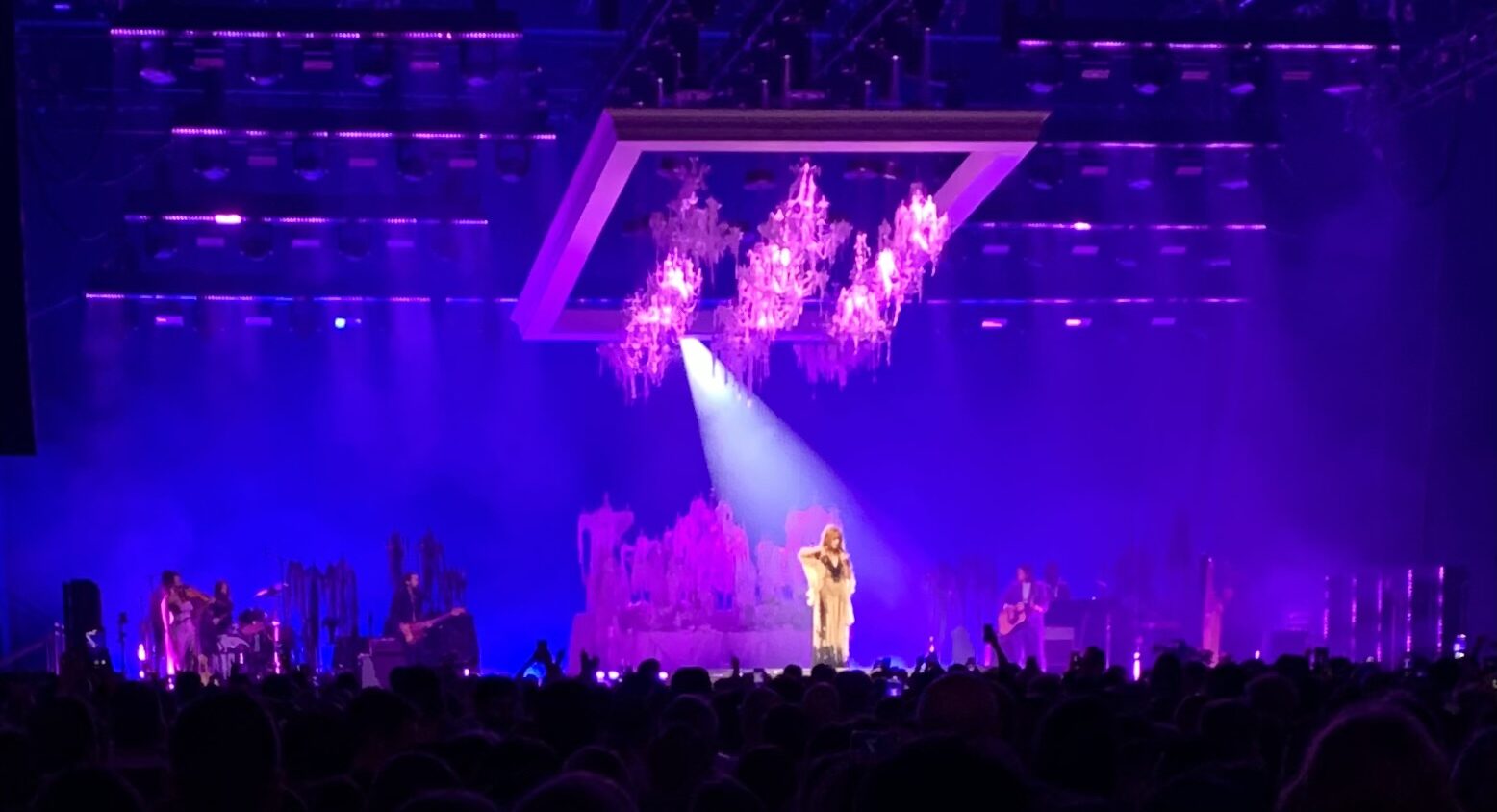
    Over the past few years I have been listening to A LOT more music. I have been to see live bands once again, I have bought newly released records on vinyl (for which I blame my partner entirely), and I have listened to hours and days of music online. After a less musical decade in my thirties, my forties have seen my passion re-ignited.

    Therapy

    I have learnt a lot about how I can best foster my mental wellbeing over the past five years and when I am feeling particularly anxious or stressed, I find silence or white noise most restful and reassuring. In order to enjoy music I have to have some emotional capacity. When I do, music can be a wonderful escape into other moods, and a distraction from stress.

    Background beats can are a wonderful way to lighten the long, dark home-working days of winter and help relax or find a flow state of concentration.

    Music helps me connect with who I am and what I feel, and it contributes to my mental wellbeing in many ways.

    Hope

    Over the past few years I have discovered a lot of new artists who are releasing new music now. It gives me such hope to listen to and buy albums by contemporary artists and bands. I LOVE listening to music from now, rather than bygone decades.

    Growing up all the music I felt passionate about was from the past, from the 60s or the 70s or the 80s even. I would tell someone about my favourite bands or a song I had just discovered, only to find out that their ‘best’ gigs, the best moments were in the past. I had missed them at their peak, their authentic best moment. The singer was long dead, or ‘worse’ had sold out.

    I still love music from those decades of course, but nowadays most of what I listen to is new. Released this year, last year… it’s being made right now on this planet, sometimes in this country, or even this city. Last weekend I discovered a new band that is local to where I live. I am SUPER excited about seeing them live. Listening to their songs from… right here!

    In this post-pandemic, cost of living crisis, strikes, bad weather, climate catastrophe reality, new music gives me hope. Hope for creativity, hope for the future.

    Joy

    Seeing a band live last year I felt the music in my whole body. Even my feet were vibrating even though I was standing still. Joy is a wonderful part of seeing a concert live, of experiencing the music, the rhythm, the dancing… or in my case the bobbing along happily on the spot.

    It gives me great joy to experience music, and to see the artwork, read the lyrics, discover new things about the artists and bands I like. Some of my music listening happens entirely on my phone, some happens live, some happens on record players. I don’t collate it, count it, track it or set goals. It’s something I simply do because I enjoy it.

  • Blogging for 2023: private and public posts

    … and we are off. The first, shiny new blog post of the year is here!

    I hope you had a restful end to 2022 and are looking forward to what 2023 may bring. I am still on holiday, having taken some overdue leave and I am enjoying the extra rest. It’s giving me time to catch up with my thoughts, do some exercise and celebrate my partner’s birthday with a trip to the coast.

    Back to blogging. Literally. I am kicking off my year of blogging by writing about blogging: for the first time in a few years, I have set up a new space for me to write in. A counterpart to this one, my primary domain, which offers me a private space for articulating my thoughts.

    Two spaces?

    It’s actually more than two spaces to write in, as I like to write a lot. I have paper based and digital journals, in which I write with blue and black ink and I like the speed of writing with a fountain pen as well as the sound it makes. A noise I had forgotten for a while.

    I also have plenty of digital spaces to write in, mostly work-related, from social media, others’ platforms and this site, my own space.

    It’s useful for me to have more than one space, as it helps me write about the different things I am interested in, and with different readers in mind.

    Most people know me online through my day job, and they may not necessarily want to read about lots of unrelated things. I have tried in the past to bring everything I do together, but over time I have found that having separate spaces works better for me.

    Why private?

    This is a topic I have written about before, as I have always had different degrees of openness in my practice. It helps me to have a private space: it makes me feel safe to be completely honest, to write things down that I am still puzzling out, and to have a space to work through doubts or worries. It also gives me a space to revel in being me.

    Most importantly, I find it fun to set up a new space for myself. It gives me a wonderful sense of turning over a new leaf. It’s the start of something.

    I came across something I blogged about in 2018, about how completing something fun is an important part of my practice:

    As often as I can, I dedicate some time to doing something fun. For example, I enjoy making a web page and publishing it. Or making an image for something. Or reading/writing something. It doesn’t really matter what it is, it’s about completing it and getting a sense of achievement from it. A quick win. A lot of what I work on is a) long term, b) invisible or c) collaborative and so in order to balance these with feeling that I have accomplished something I often do ‘something fun’ and see it completed. It reminds me of how good I am at making things happen and often helps me see bigger, more complex things through to completion with a greater sense of confidence.

    Setting up a new space to write ticks all those boxes. It’s a quick win. It’s fun. It gives me a sense to have achieved something and it’s only the 3rd January…

  • Blogging about blogging

    It’s Monday and the temperature outside has plummeted to (for UK standards) freezing temperatures. Since the start of this month I have blogged more often again, aiming for a post on most weekdays. In the best tradition of the medium, I am going to blog about blogging today.

    Why now?

    During the recent [insert your own word here] on Twitter, and a subsequent re-activation of my Mastodon account, I was reading some really interesting reflections on what folk were hoping to leave behind (on Twitter), what they were hoping to find and contribute to (on Mastodon) and what they aim for overall with their digital presence.

    It made me feel both sad and hopeful. Most of all, it made me consider what it is that I WANT from my time here on the internet.

    Not the activities that are part of my day job for which I need to maintain profiles on particular platforms, but those parts that are shaped by what I want to do and who I want to interact with.

    Which brought me back to my own domain, this space, that for many years has been my own platform, unchanged by the ebbs and flows of digital fortunes.

    Thanks to Reclaim Hosting (#4life) I have long been able to administrate and safeguard my own space, giving me a channel for my own voice, my things, my creativity and projects.

    What am I hoping for?

    My blog has a regular readership in the hundreds, so not particularly huge, and I mostly blog for myself. Sometimes to curate resources to refer to, sometimes to share practical tips, but largely it’s a space for me to think about what I am interested in and share parts of that.

    In 2020 I really struggled for what to say. Work kept going, but my professional practice was so dominated by the crisis response, that I found it hard to articulate anything.

    Since then, I have published a lot on different platforms, but most of it is very much directed at the work I do, focused on projects like my book or specific events.

    More recently, with the Twitter/Mastodon conversation in full swing, I came to the conclusion that I need to blog more. To hear my own voice represented here. I am not sure yet whether I really ‘need’ another social media platform, federated or otherwise, but I do want my own space to be alive and kicking. I started blogging more than 20 years ago (and I can’t believe that I am old enough for that to be true) and I am grateful that I can continue that practice here, on my own domain.

  • Getting back to running.

    I miss being a runner. It’s been more than two years since I ran Half Marathons, and whilst I have never been particularly competitive, I miss the balance and headspace running used to offer me.

    For 2020/21, I am definitely giving myself a lot of grace. Running was not a priority as life imploded. I had a lot going on that year besides COVID. For the past 14 months, running had to take a back seat as I recovered from a serious shoulder injury. It started as a frozen shoulder and then turned into something the consultant called a 1% chance injury. Only 1% of people who get frozen shoulder go on to develop what I had. It wasn’t fun.

    So now, I need to do strength training to get more left side back to full strength and yoga, to get some flexibility back and a full range of motion (I am still a little removed from where I want to be). What I am most looking forward to however is getting back to running, or rather feeling like going for a run.

    Couch to 5k

    When I asked my physio for advice, he gave me a great 5k programme to try. It’s designed to enable me to get back to running without risking injury to the precious shoulder. This week, I am starting with 30 min, 4:30 min walk, 30 sec run, repeated 6 times. Each week, the run duration gets a little longer, so that I am moving from running 1 min per every 5 minutes, then 2, then 3 and so forth.

    I am not going to do more than 30 min until I can run the entire time, and I am hoping to just get back to 5k by spring.

    Fitting running back into my life

    One of the biggest problems I have is fitting running back into my life. I know I have the time, but FINDING the time is harder than it looks.

    Avoiding dark runs and runs when it’s too cold (asthma), and also work, dog walks and so many other things I am doing each week.

    I love home-working and hybrid working, but one of the challenges for me continues to be getting enough exercise in, even with our daily dog walks. But running before or after work in the darkest weeks of the year is a mixed bag.

    That is one of the biggest advantages of the plan I am following. It’s always 30 mins, and at the moment I am trying to fit it into my lunch breaks.

    Wish me luck, and see you out there!